
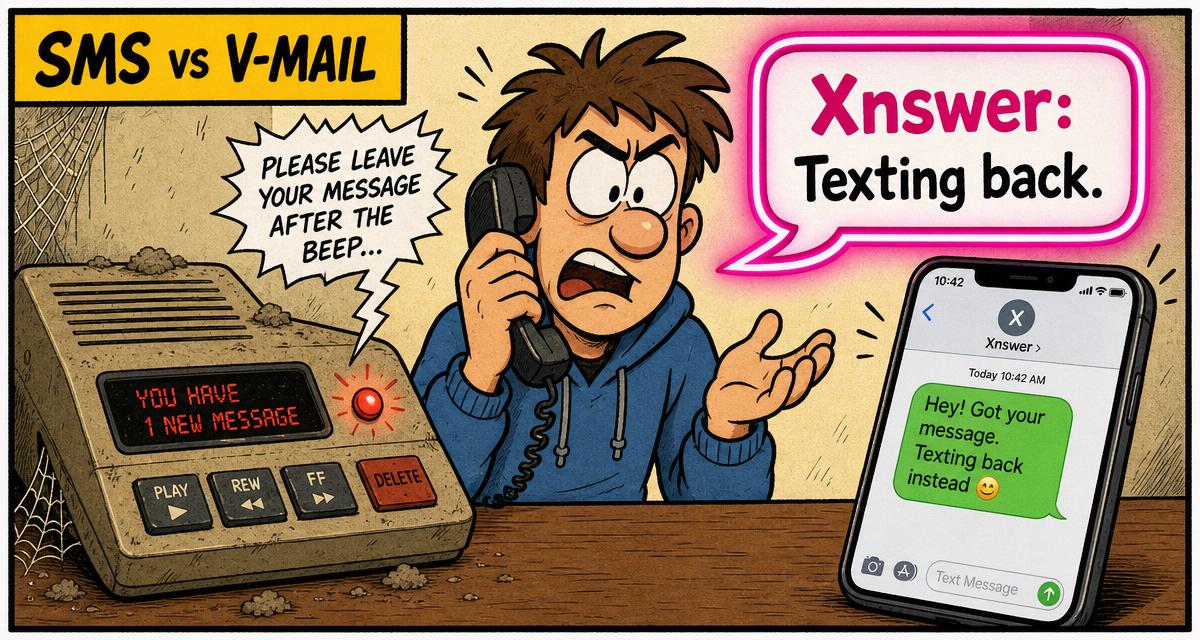
SMS Text-Back vs Voicemail
Both handle a missed call. Only one keeps the customer. Here's the honest comparison.
The core problem with voicemail
When a caller hits voicemail, they're often mid-decision. They already dialled because they need help; voicemail asks them to leave a message and wait. Some will keep calling other businesses before you get back to them.
Once carrier-verified SMS is active, text follow-up gives the caller a low-effort written way to continue. Xnswer can ask for the job, location, urgency, and preferred time while the enquiry is still current.
Head-to-head
| Metric | Voicemail | SMS text-back |
|---|---|---|
| Caller response path | Leave a message and wait | Reply in the existing phone conversation |
| Time to first contact | Hours (whenever you check) | Under 5 seconds, automatic |
| Captures caller intent | Only if they narrate it | AI asks 2–3 qualifying questions |
| Works after hours | Yes, but they hang up | Yes — and locks in the lead |
| Customer effort | Speak, wait, hope for callback | Tap reply on a text they already got |
| Cost | Free (built in) | From $197/mo — live AI voice, with SMS text-back as backup |
| Setup time | Already on | Typically 5–7 days (A2P 10DLC vetting) |
Qualification is where SMS pulls away
A voicemail transcript may tell you that someone called. An SMS conversation, driven by an AI trained on your services, can tell you what job they need, where they are, and how urgent it is. The result is a qualified request for the owner to accept, not a guaranteed booking.
When voicemail is still fine
For a personal number or a business with low call volume and little value tied to phone enquiries, built-in voicemail may be enough. Compare your own missed-call volume, average job value, and close rate before paying for follow-up automation.
See it live
Train Xnswer on your website URL in under a minute and experience a simulated missed call end-to-end.